Analysis of Femtosecond Laser Micro-hole Machining Process for H13 Tool Steel: How to Achieve No Microcracks under Scanning Electron Microscopy (SEM)
Technology News · 2026/10/22 · 29 views
H13 is no stranger to peers engaged in mold manufacturing: it is one of the most commonly used hot work tool steels, featuring high hardness, good toughness and excellent thermal fatigue resistance. However, it is precisely because of these "advantages" that it has also become one of the most difficult-to-machine tool steels.
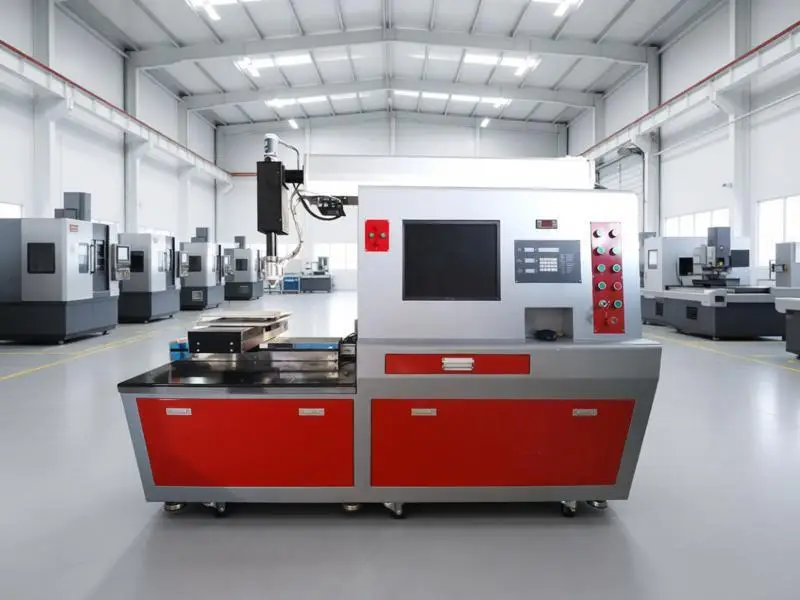
Professionals in the mold manufacturing sector are no strangers to H13 steel: as one of the most widely used hot-work tool steels, it stands out for its high hardness, exceptional toughness, and superior thermal fatigue resistance. Ironically, these very strengths also make it one of the hardest tool steels to machine. When drilling micro-holes in H13 via conventional mechanical drilling, bits wear rapidly and are prone to breakage, while microcracks frequently form on hole walls. Electrical discharge machining (EDM) can produce deeper holes, but it suffers from low efficiency and inevitably leaves recast layers on the hole wall surface.
With 29 years of expertise in precision drilling, Jiajiayong Laser has accumulated extensive first-hand data on femtosecond laser micro-hole machining for H13 tool steel. Today, we will explain how femtosecond laser technology achieves "SEM-verified microcrack-free hole walls" when processing H13.
I. Three Common Pain Points in H13 Micro-Hole Machining
1. Hard, tough composition: the Achilles' heel of mechanical drill bits
After quenching, H13 typically reaches a hardness of HRC 45 to 55, paired with high toughness. When drilling micro-holes with a mechanical bit, cutting forces concentrate at the drill tip, making microcrack formation highly likely. Furthermore, once the bit's aspect ratio exceeds 10:1, its rigidity drops sharply, leading to frequent deflection and breakage.
2. High thermal sensitivity: the hidden risk of heat-affected zones
H13 is temperature-sensitive. During traditional nanosecond laser processing, pulse energy deposition causes localized temperature spikes, resulting in recast layers, hole wall microcracks, and even localized hardness changes. These microscopic defects become initiation points for crack propagation when the mold is subjected to thermal cycling and mechanical stress during service, directly reducing the mold's service life.
3. The conflict between aspect ratio and taper control
Mold cooling channels and vent holes often require an aspect ratio above 10:1. Laser energy attenuates continuously as it travels through deep holes, leading to widespread industry challenges such as incomplete penetration at the hole bottom or unregulated taper.
II. Femtosecond Laser "Cold Processing" Mechanism: Eliminating Microcracks at the Physical Level
Femtosecond lasers have a pulse width on the order of 10⁻¹⁵ seconds, far shorter than the electron-lattice energy coupling time (approximately 1–10 picoseconds). This means the material is directly vaporized and ablated before the lattice can absorb heat, leaving no time for heat to diffuse to surrounding areas.
According to a research review on micro-hole ultra-precision machining from Northwestern Polytechnical University, femtosecond laser processing produces an extremely small heat-affected zone, with no recast layers or microcracks on the hole wall—results that other processing methods cannot achieve simultaneously. This is why femtosecond laser is our preferred choice over nanosecond laser for H13 tool steel processing.
Actual measurement data from Jiajiayong Laser for H13 tool steel: when machining 0.3mm diameter, 6mm deep micro-holes (20:1 aspect ratio), SEM observation confirms a smooth hole wall surface free of recast layers and microcracks, with roughness Ra < 0.4μm. No subsequent grinding or polishing is required, and the holes can be used directly as vent holes or oil passages.
III. Process Analysis: Coordinated Control of Five Key Parameters
High-quality micro-holes in H13 are not achieved by simply turning on the machine. They are the result of coordinated control over five core parameters:
1. Matching pulse energy and repetition rate
Research shows that pulse energy and repetition rate have a significant impact on hole morphology. Insufficient energy cannot penetrate the material, while excessive energy causes unnecessary ablation. Targeting H13's ablation threshold (approximately 2–3J/cm²), Jiajiayong Laser sets the single-pulse energy density to 1.5–2 times the ablation threshold, paired with a 50–200kHz repetition rate, to achieve stable material removal.
2. Precise defocus control
Research published in the Laser Technology journal clearly demonstrates that an optimal laser defocus value exists to minimize post-processing surface roughness. For H13 processing, we calibrate and control the defocus amount within this optimal range to ensure the most uniform spot power density distribution and minimal hole wall roughness.
3. Spiral layer-by-layer scanning strategy
For deep holes with a 20:1 aspect ratio, we use a spiral scanning drilling method. This approach effectively reduces recast layer formation, and delivers better hole roundness and taper control than the pulse impact method. The specific workflow is as follows: the full hole depth is divided into hundreds of layers, with 0.5–1μm removed per layer. The laser focus moves downward in real time as depth increases, and coaxial auxiliary gas is used to forcibly expel molten material.
4. Auxiliary gas and processing environment
Research confirms that processing debris is more easily expelled under auxiliary gas purging, resulting in micro-holes with fewer recast layers and higher accuracy. We use coaxial high-pressure nitrogen (0.5–0.8MPa) for purging to ensure no residue remains inside the holes.
5. Five-axis linkage and dynamic focusing
Since mold parts often feature inclined and curved surfaces, we employ a five-axis linkage control system, with the laser head automatically positioning itself for processing. Whether drilling inclined holes, circumferential holes, or holes on curved surfaces, processing can be completed as long as the program is programmed, ensuring the perpendicularity of micro-holes.
IV. Comparison with Traditional Processes: Data Demonstrates Performance
For machining 0.3mm diameter, 6mm deep micro-holes (20:1 aspect ratio) on H13 tool steel:
| Comparison Item | Mechanical Drilling | EDM Machining | Jiajiayong Femtosecond Laser |
| Aspect ratio capability | ≤10:1 (high risk of drill breakage) | ≤10:1 | 20:1 |
| Hole wall quality | Microcrack risk | Recast layer (5–8μm) | No recast layer, no microcracks |
| Roughness Ra | 1.0–2.0μm | 0.8–1.5μm | <0.4μm |
| Time per hole | 30–60 seconds (including tool change) | 5–8 minutes | 45 seconds |
| Post-processing | Deburring required | Grinding required | No treatment needed |
| Special-shaped/inclined holes | Unachievable | Difficult to achieve | Achievable via five-axis linkage |
V. Value Jiajiayong Laser Delivers to Mold Enterprises
Built on 29 years of technical accumulation and our partnership with the Laser Institute of the Chinese Academy of Sciences, Jiajiayong Laser has mature delivery capabilities for micro-hole machining of mold steels:
1. Applicable materials: H13, S136, NAK80, SKD61, cemented carbide, powder metallurgy steel, etc.
2. Machining capacity: minimum aperture 3μm, maximum aspect ratio 20:1 (controllable taper ≤3μm), accuracy ±1μm
3. Supported hole types: straight holes, tapered holes, stepped holes, inclined holes, curved holes, special-shaped holes (via five-axis linkage)
4. Hole wall quality: SEM-verified to be free of microcracks and recast layers, Ra < 0.4μm
5. Automation integration: can be equipped with visual positioning, automatic loading/unloading, and assembly line docking
We are not only an equipment manufacturer, but also provide来料 processing services for all types of mold steel. For enterprises producing high-precision molds (such as optical lens molds, precision electronic molds), the yield improvements and rework reductions delivered by femtosecond laser typically allow equipment investment costs to be recovered within six months.
VI. Recommendation: Submit Samples for Verification, Let SEM Confirm Quality
The quality of H13 tool steel micro-hole machining cannot be proven by words alone—SEM imagery is required. We recommend sending an H13 tool steel sample and your design drawings. Jiajiayong Laser's Application Verification Center will complete sample processing within 3–5 working days, and issue a detailed report including aperture CPK, 5000x magnification SEM images of the hole wall, aspect ratio measurement data, taper data, and cycle time estimates. You can personally inspect under an electron microscope to confirm the hole wall is truly free of microcracks.
Over the past 29 years, Jiajiayong Laser's mission has remained unchanged: to make no hole in the world difficult to drill. No matter how hard H13 is, or how challenging deep hole machining may be, we are ready to work with you to deliver results that meet SEM-grade standards.
Related Articles
- Stove Burner Nozzle Drilling: Precision Manufacturing Upgrade Starting from 0.003mm
- Drilling 1600 special-shaped micro-holes on a hemispherical surface: Why traditional processes are incapable of realizing this requirement, and how Jiajiayong 5-axis laser processing breaks this technical bottleneck?
- Over 10 million holes with a diameter of 0.1 mm: how can this drilling task be realized with conventional mechanical machining drilling processes?