Aerospace High-Precision Oil Filter Screen Micro-Hole Laser Forming Solution — Jiajia Laser One-Step Forming Technology for Main Hole + High-Pressure Auxiliary Hole
Solutions News · 2026/10/27 · 34 views
In the fuel and lubricating oil systems of aero-engines, the oil filter screen acts as the "last line of defense" to guarantee the safe operation of the engine. Once fine particles in the fuel enter the combustion chamber, they may cause fuel nozzle clogging, combustion efficiency degradation, and even in-flight engine shutdown. Contaminants in the lube oil system, on the other hand, will lead to bearing abrasion and rotor scoring, directly threatening the engine's service life and flight safety.
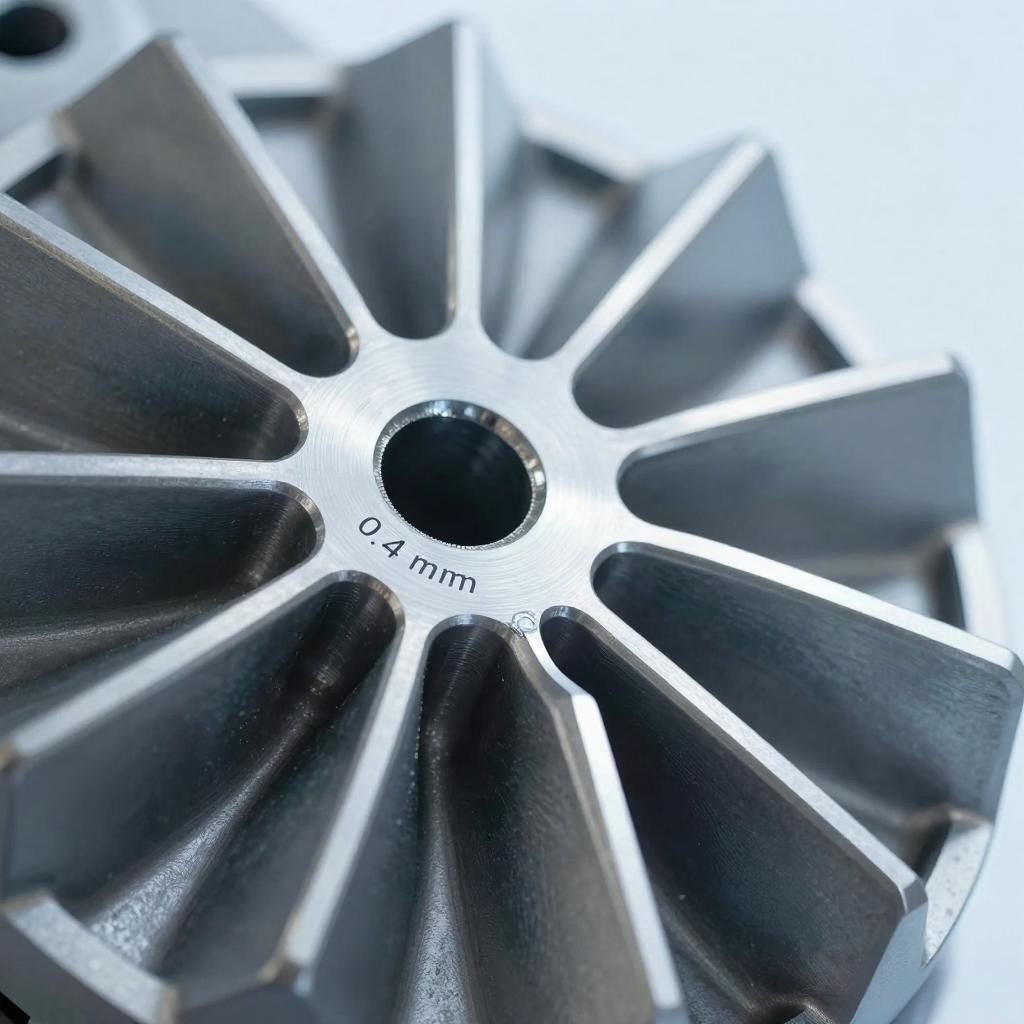
In the fuel and lubricating oil systems of aero-engines, the oil filter screen acts as the "last line of defense" to guarantee the safe operation of the engine. Once tiny particles in the fuel enter the combustion chamber, they may cause nozzle clogging, reduced combustion efficiency, and even aero-engine in-flight shutdown; impurities in the lubricating oil system may wear bearings and scratch the rotor, directly threatening the service life of the engine and flight safety.
The processing of oil filter screens in the aerospace field does not follow the precision requirements of conventional industries, but faces a manufacturing scenario that takes "zero defect" as the bottom line and "traceability" as the standard configuration.
SAE AS9100D: The "Access Credential" for Aerospace Manufacturing
AS9100D is a quality management system standard issued by the International Aerospace Quality Group (IAQG). Based on ISO 9001, it incorporates the special requirements of the aerospace sector for safety, reliability and quality management, covering the full process from product design, development, production, supply chain management to maintenance services.
Derived from ISO 9001, AS9100D is a "strict upgraded version" built exclusively for the aerospace industry, representing the access credential to the international aerospace supply chain. Obtaining AS9100D certification means that the enterprise's quality management system has passed the audit of the internationally recognized top aerospace standard.
For oil filter screen manufacturing, this means that the processing parameters and inspection data of every filter screen and every micro-orifice must be traceable. This is not a matter of "trying to achieve it", but a bottom line that "must be achieved".
Main Orifice + High-pressure Auxiliary Orifice: The Design Logic of One-step Forming
Aero-engine fuel/lubricating oil filter screens usually adopt a composite orifice design: the main orifices undertake the main filtering function, while the high-pressure auxiliary orifices provide extra flow channels when system pressure fluctuates, ensuring the continuous patency of the oil circuit. The two types of orifices work collaboratively on the same filter screen, each undertaking different functional roles.
In traditional processes, main orifices and auxiliary orifices are often processed in separate steps: the main orifice array is completed on one equipment first, and then transferred to another equipment to process the auxiliary orifices. Every extra clamping brings additional risk of positioning deviation, as well as the possibility of edge damage.
JiajiaYong Laser integrates the processing of main orifices and high-pressure auxiliary orifices into the same procedure. With the same coordinate system, one-time clamping, and the same set of benchmarks, the relative position accuracy of the two types of orifices is guaranteed by the equipment's own repetition positioning accuracy. The position deviation between micro-orifices is controlled within an acceptable range, and there is no cumulative error introduced by inter-process turnover.
Micro-orifice Forming: Full-chain Control from Precision to Cleanliness
The micro-orifice processing of aero-engine oil filter screens puts forward comprehensive requirements for precision, orifice wall quality and cleanliness.
In terms of precision, laser drilling technology can realize micron-level aperture control, ensuring that the size and shape of each orifice fully meet the design requirements. Laser drilling is not only suitable for processing micron-level small orifices, but also maintains the structural integrity of the filter screen without applying mechanical stress to the material. For aerospace fuel filter screens, this means that tiny impurities in fuel can be reliably intercepted, and the safe operation of the engine is guaranteed.
In terms of orifice wall quality, the micro-orifice processing of aerospace oil filter screens has long faced problems such as large taper, recast layer and slag adhesion around the orifice and on the inner wall. Through optimized pulse parameters and auxiliary processes, JiajiaYong Laser effectively reduces the recast layer and slag adhesion on the orifice wall. The improvement of orifice wall smoothness directly translates into two advantages: lower fluid resistance and smaller pressure drop during filtration; impurities are easier to remove during backwashing, and the service life of the filter screen is longer.
In terms of cleanliness, aerospace filter elements need to undergo strict cleanliness tests before delivery. The internationally common performance test standards for aviation kerosene filter elements mainly include ISO 16889, SAE ARP1827, GJB 6892, etc.; hydraulic filter elements need to meet the requirements of GB/T 46719.6-2025 Aerospace — Test methods for hydraulic filter elements — Part 6: Cleanliness grade. These standards specify clear test methods and judgment criteria for the cleanliness of filter elements after production and before shipment.
JiajiaYong Laser equipment adapts to the above cleanliness test requirements. Laser processing is a dry processing method that does not require cutting fluid or lubricant, reducing the introduction of pollutants from the process source. The processed filter screen can directly enter the cleanliness inspection link without additional cleaning procedures, with higher inspection pass rate and shorter delivery cycle.
Make Every Micro-orifice on Every Filter Screen Stand up to Scrutiny
The laser forming of micro-orifices for aerospace oil filter screens tests not only the drilling capacity of the equipment, but also the in-depth understanding of the balance between aerospace safety standards, material properties and full-process traceability. Thousands of micro-orifices on each filter screen, as well as the aperture accuracy, orifice wall smoothness and cleanliness grade of each orifice, determine the fuel efficiency of aero-engines, the service life of lubricating oil and flight safety to varying degrees.
JiajiaYong Laser has focused on the field of laser precision micro-orifice processing for 28 years. Its equipment meets the requirements of SAE AS9100D aerospace quality management system and military cleanliness test standards, supports one-step forming of main orifices and high-pressure auxiliary orifices, and provides a complete micro-orifice forming solution for aero-engine fuel/lubricating oil filtration systems, covering everything from proofing and verification to mass production.
Welcome to contact JiajiaYong Laser for sample trial processing and verification, to ensure that every micro-orifice on every filter screen stands up to scrutiny.
Related Articles
- Micron-precision Laser Drilling for Fine Filter Screens: A Scalable Industrial Solution for High-density Distributed Micropores
- Medical Precision Micro-hole Machining: Customized solutions for holes with diameters of 3 microns and above
- Through Glass Via (TGV) Technology: Precision Micro-hole Machining Solution